


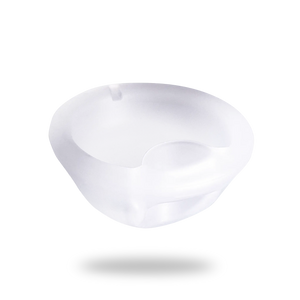
You chose La Cup Luneale for its clarity and purity. But after a few cycles, has it changed appearance? Has it turned white and opaque, or yellowed or browned?
Don't panic — it's not dirty and it's not ruined. This is a normal chemical reaction of silicone when exposed to water or blood. Here's how to identify the problem and restore it to its day-one clarity.
⚠️ Note: These tips apply to cups made from Medical-Grade Silicone (such as Luneale). We cannot guarantee results on TPE (plastic) cups.
Table of contents
1- Diagnosis: Is your cup opaque or yellowed?
Before treating, you need to know what you're dealing with. Hold your cup up to the light:
| Visual Appearance | The Cause | The Explanation |
|---|---|---|
|
White Haze / Opaque (Feels rough to the touch) |
Limescale (Hard water deposits) |
The water used for sterilisation was too hard. Limescale has built up on the silicone surface during boiling. |
|
Yellow / Brown (Stains or overall discolouration) |
Haemoglobin (Iron) |
The iron in blood has oxidised or "cooked" onto the silicone — often caused by rinsing with hot water. |
2- Case 1: My cup has turned white / opaque
This is very common in areas with hard water. Limescale is not harmful, but it can make the cup stiffer and trap odours.
The Anti-Limescale Solution:
You need to dissolve the mineral deposit with acidity.
- As a preventive measure (at each sterilisation): Add a tablespoon of white vinegar (distilled vinegar) or lemon juice to your sterilisation water.
-
As a cure (if it's already completely white): Give it an overnight soak.
- Fill a glass with a 50% hot water + 50% white vinegar mixture.
- Submerge the cup overnight.
- Rinse thoroughly the next morning. It will look brand new!
3- Case 2: My cup has yellowed or browned (stains)
If your cup looks like steeped tea, blood pigments have set into the silicone. This often happens when you rinse your cup with hot water, which fixes haemoglobin into the material.
The Stain-Removal Solution:
To deep-clean discoloured silicone, hydrogen peroxide works wonders.
- Place your cup in a glass.
- Fill it with hydrogen peroxide (10-volume / 3%, available from pharmacies or supermarkets) diluted with a little water. Alternative: pure lemon juice + boiling water.
- Leave to soak overnight.
- Important: Rinse very thoroughly with clean water, then sterilise (boil for 5 minutes) to remove any residue before using again.
4- Preventive steps to keep it looking new
Prevention is better than cure. To keep your Cup Luneale clear for years to come:
- Golden Rule: Always rinse with COLD WATER first. Cold water flushes blood away. Hot water cooks blood and sets the colour.
- Mechanical cleaning: Use a soft toothbrush (kept solely for this purpose!) or our Cleaner to thoroughly clean the crevices and holes, where biofilm can build up.
- No unnecessary soaking: Don't leave your cup sitting in stagnant water for days on end. Once cleaned, dry it and store it in its breathable pouch.


Vos commentaires (1)
J’utilise ma Cup depuis 3 ans maintenant et j’en suis très satisfaite. Néanmoins, j’aimerais savoir si sa durée de vie est limitée dans le temps et si oui combien ?
Elle commence à durcir à cause du calcaire et devient douloureuse malgré les temps de pause dans du vinaigre toute la nuit et rinçage précautionneux.
Un avis ? Une question ? Laissez un commentaire.